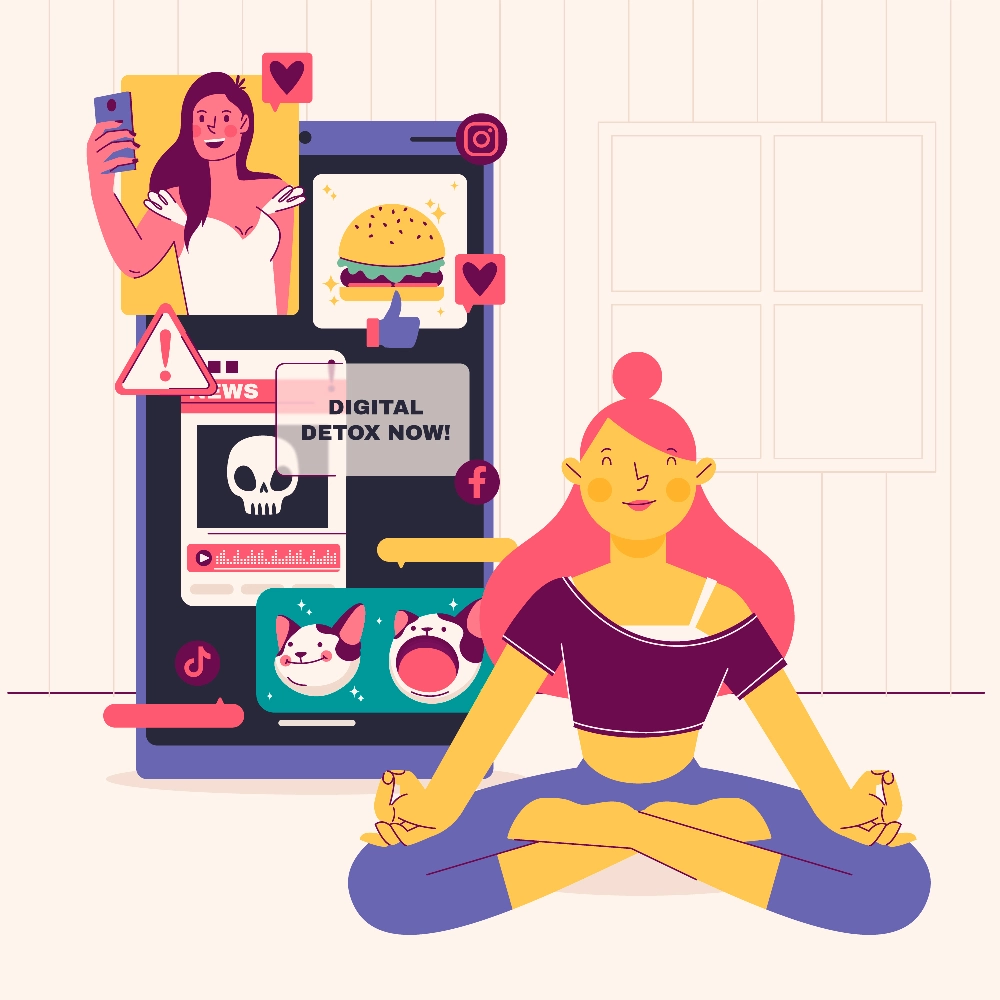
Constant notifications, scrolling and late‑night screen time often leave many people feeling distracted and drained. I see this happen often. A Digital Detox—taking breaks from phones and social media—can create space for rest, focus and more meaningful real‑world connections.
Why a Digital Detox Helps
- Focus: Fewer interruptions make everyday tasks feel more manageable.
- Improved sleep: Limiting screens before bed reduces late‑night distractions and blue light exposure.
- Comparison: Spending less time on social media means fewer chances to measure your life against carefully curated posts.
- Stronger connections: Phone‑free meals and meetups encourage present, engaging conversations.
A Digital Detox is not a cure‑all for anxiety or deeper mental health concerns. Results vary based on habits and circumstances,. Many people find even small breaks refreshing.
Simple Ways to Start a Digital Detox
You do not need to go completely offline. I have found that beginning with changes works well.
- Create a screen‑free window before bed.
- Turn off notifications.
- Take media breaks during the day.
- Swap some time for walking, reading or meeting friends in person.
These adjustments help reduce screen time without making technology feel like the enemy.
Building a Healthier Relationship with Technology
Phones and social media remain useful for work, learning and staying in touch. The real goal of a Digital Detox is intentionality—choosing when and why you pick up your device or reach for it out of habit. I find that this intentionality helps keep my attention.
In 2026, a practical Digital Detox offers a way to reassess your habits and create a balanced relationship with your phone. Start small, stay consistent and notice how an offline time can improve both focus and everyday wellbeing.