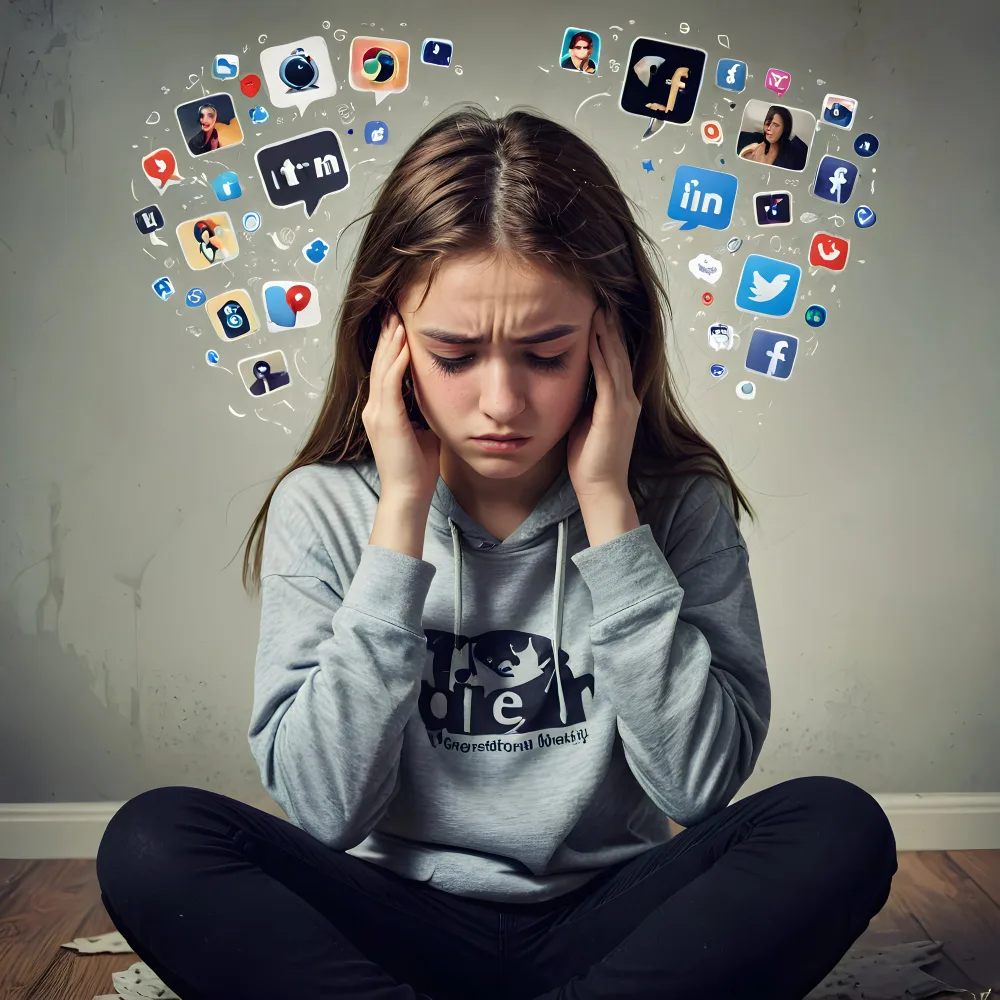
Social media can help people stay connected, discover supportive communities, and share important moments. However, when scrolling becomes constant or online comparisons begin to affect your confidence, it is natural to ask: how does social media affect mental health?
The answer is not as simple as saying social media is entirely good or bad. Its impact depends on how you use it, what kind of content you see, the relationships you have online, and your personal circumstances.
What Research Says About Social Media and Mental Health
Some studies have linked certain social media habits with anxiety, depressive symptoms, poor sleep, and lower self-esteem. However, a link between two factors does not automatically prove that social media directly causes mental health problems.
For some people, online communities provide friendship, emotional support, and a sense of belonging. This can be especially valuable for individuals who feel isolated or have difficulty finding like-minded people in their local communities.
For others, social media may expose them to cyberbullying, unrealistic lifestyles, negative news, or pressure to appear successful and happy at all times. Constantly comparing your everyday life with carefully edited posts can gradually affect your mood and self-image.
This is why the mental health effects of social media cannot be measured by time spent online alone. The type of activity, emotional reaction, and quality of online interactions also matter.
What Recent Research Reveals
Research published in 2026 continues to suggest that the relationship between social media and emotional well-being is complicated.
An October 2026 systematic review of studies involving young people found very small associations between social media use and symptoms of anxiety and depression. These findings suggest that social media use by itself is unlikely to explain the broader youth mental health crisis.
Another 2026 meta-analysis found that the relationship between social media use and mental health differed across school-age groups. This highlights the importance of age, personal experiences, family environment, and individual vulnerability when considering the effects of social platforms.
Overall, recent findings support a more balanced view. Rather than focusing only on how long someone spends online, it is useful to consider what they do online and how they feel afterward.
When Can Social Media Affect Mental Health?
Social media may become unhealthy when it begins to interfere with sleep, concentration, relationships, or everyday responsibilities.
Certain online habits may be more likely to affect emotional well-being, including:
- Comparing your appearance, lifestyle, or achievements with other people’s posts.
- Checking notifications repeatedly throughout the day.
- Scrolling through upsetting content before bed.
- Following accounts that regularly make you feel anxious or inadequate.
- Spending less time on offline relationships and activities.
- Feeling emotionally drained after using social media.
Not everyone will experience these effects in the same way. The important step is to notice how social media fits into your own life.
Signs Your Social Media Habits May Need a Reset
You may benefit from changing your routine if you regularly experience:
Sleep Problems
Late-night scrolling, notifications, or the urge to check updates can make it harder to relax and fall asleep.
Negative Comparisons
Seeing highly edited images and carefully presented lifestyles may leave you feeling unsuccessful, unattractive, or behind in life.
Reduced Concentration
Frequent notification checks can make it difficult to focus on work, studying, reading, or conversations.
Emotional Exhaustion
Consuming arguments, disturbing news, or stressful content for long periods can leave you feeling tense or mentally overwhelmed.
How to Build Healthier Social Media Habits
You do not necessarily have to quit social media completely. Small changes can help you use it in a more intentional way.
Set Realistic App Limits
Use built-in screen-time tools to create boundaries around the apps you use most. Treat these limits as reminders to pause rather than as a reason to feel guilty.
Mute Accounts That Affect Your Mood
You can often mute or unfollow accounts without creating conflict. Curate your feed so that it includes useful, inspiring, entertaining, or supportive content.
Protect Your Sleep
Keep your phone away from your bed when possible and create a screen-free period before going to sleep. Turning off nonessential notifications can also reduce the temptation to check your device at night.
Choose Active Connection Over Passive Scrolling
Sending a thoughtful message, joining a supportive discussion, or speaking with a friend may feel more rewarding than endlessly scrolling through posts.
Pay Attention to Your Reactions
Ask yourself how you feel before and after using social media. If you consistently feel anxious, discouraged, or exhausted, that may be a sign that your habits or the content you follow need to change.
Should You Stop Using Social Media?
For many people, completely leaving social media is not necessary or practical. Social platforms can support friendships, professional opportunities, creative expression, and access to helpful communities.
The goal is to create a healthier balance. If social media is helping you connect, learn, or express yourself, it may have a positive role in your routine. If it is interfering with your sleep, mood, self-esteem, or relationships, stronger boundaries may be useful.
If feelings of anxiety, sadness, isolation, or emotional distress continue, consider speaking with a qualified mental health professional. Social media habits may be part of the issue, but they are not always the only cause.
So, how does social media affect mental health? The answer depends on the person and the way social media is used.
Online platforms can offer connection and support, but constant comparison, cyberbullying, stressful content, and disrupted sleep may negatively affect emotional well-being. By paying attention to your mood, protecting your rest, and replacing passive scrolling with meaningful interaction, you can build healthier digital habits without giving up social media completely.